.svg@webp)
DJI Lito X1 vs Mini 5 Pro vs Mini 4 Pro: Which Sub-250g Drone Should You Buy?
 Lukas
Zmejevskis
Lukas
Zmejevskis
Key Takeaways
- The Lito X1 is the smartest first purchase in DJI's sub-250 gram range, with the Mini 5 Pro reserved for when image quality comes first.
- Lito X1 and Mini 4 Pro share a 1/1.3-inch 48 megapixel sensor, while the Mini 5 Pro steps up to a 1-inch 50 megapixel unit.
- At ISO 800 the Lito X1 and Mini 5 Pro are nearly indistinguishable, and the Mini 4 Pro sits a clear step behind both.
- The Lito X1 proved most reliable at avoiding obstacles, and the Mini 4 Pro is the only one of the three without LiDAR.
- All three support native waypoint flight, so any of them can run Pixpro Waypoints missions without changing an existing workflow.
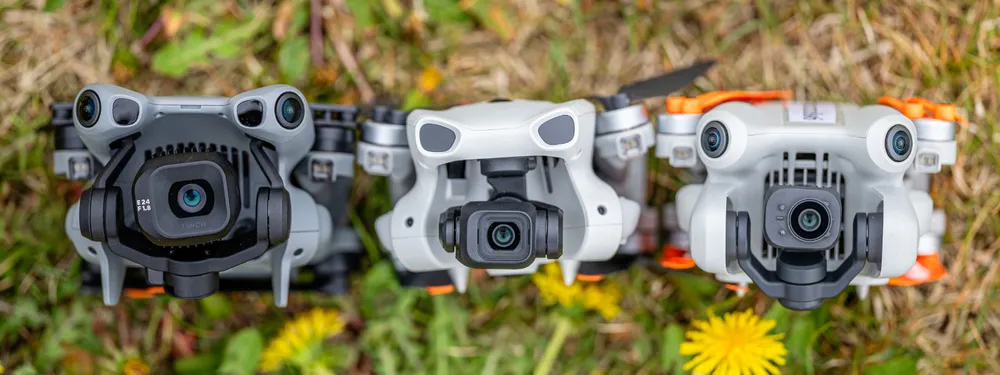
Three current sub-250 gram DJI drones, almost identical on paper, all sitting on the same shelf. The DJI Lito X1, the Mini 4 Pro, and the Mini 5 Pro each have a clear value proposition, but the differences are small enough that picking the right one is a real question. I have flown all three side by side and already published full reviews of every single one: the DJI Lito X1 review, the DJI Mini 4 Pro review, the DJI Mini 5 Pro review, and the dedicated Mini 4 Pro vs Mini 5 Pro upgrade post. This post collapses all of that into one decision framework.
The overall differences between these drones are quite small, but that is to be expected when we are talking about three drones in the same segment, all at the cutting edge of consumer technology.
Spec Comparison at a Glance
| Spec | DJI Lito X1 | DJI Mini 4 Pro | DJI Mini 5 Pro |
|---|---|---|---|
| Weight | Under 250 g | Under 250 g | Under 250 g |
| Sensor | 1/1.3-inch CMOS, 48 MP | 1/1.3-inch CMOS, 48 MP | 1-inch CMOS (DJI Mini 5 Pro specifications), 50 MP |
| Lens | 24 mm equivalent, f/1.7 | 24 mm equivalent, f/1.7 | 24 mm equivalent, f/1.8 |
| Minimum focus | 1 m | 1 m | 0.5 m |
| Max video | 4K up to 100 fps, FHD up to 200 fps | 4K up to 100 fps | 4K up to 120 fps, 1080p up to 240 fps |
| Color modes | 10-bit, D-Log M | 10-bit, D-Log M and HLG | 10-bit, D-Log M and HLG |
| Obstacle sensing | Omnidirectional vision plus front LiDAR | Omnidirectional vision, no LiDAR | Omnidirectional vision plus front LiDAR |
| Transmission | DJI O4, 15 km IC | DJI O4, 18 km | DJI O4+, 20 km |
| Internal storage | 42 GB | Minimal | 42 GB |
| Gimbal | 3-axis | 3-axis | 3-axis with 225 degrees of roll |
| Real-world flight time | About 25 min | 25 to 30 min | 20 to 25 min |
| Native waypoint flight | Yes | Yes | Yes |
The Lito X1 and the Mini 4 Pro share a sensor; the Mini 5 Pro is the one with the bigger 1-inch chip. Everything else lives within a few percent of itself.
Hardware and Build
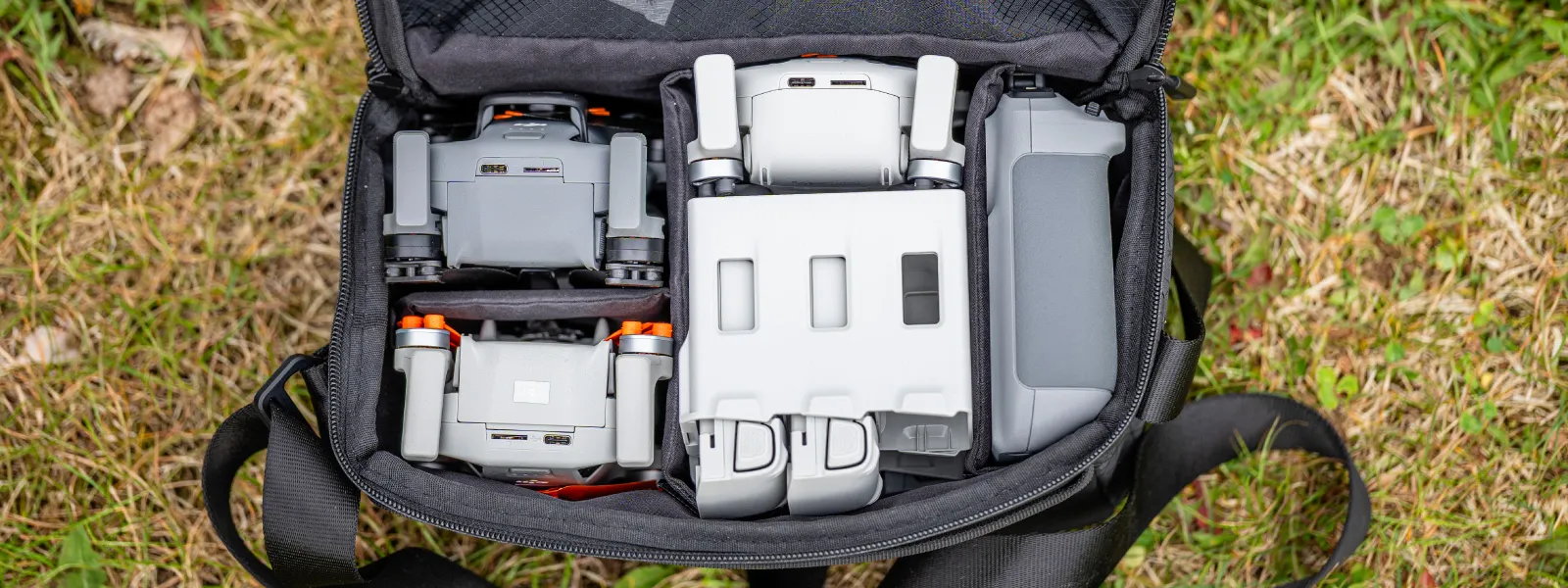
In the hand, the three drones feel like siblings. The Mini 4 Pro is the original benchmark in this size class. The Lito X1 has slightly thicker plastics, a barely visible LiDAR module, and stands vertically with the arms folded, which looks great. The Mini 5 Pro keeps the same family DNA but ships in a comically oversized carrying bag. None of these design differences change anything important, physical design has been solved by DJI for the last couple of years.
 Camera and Image Quality
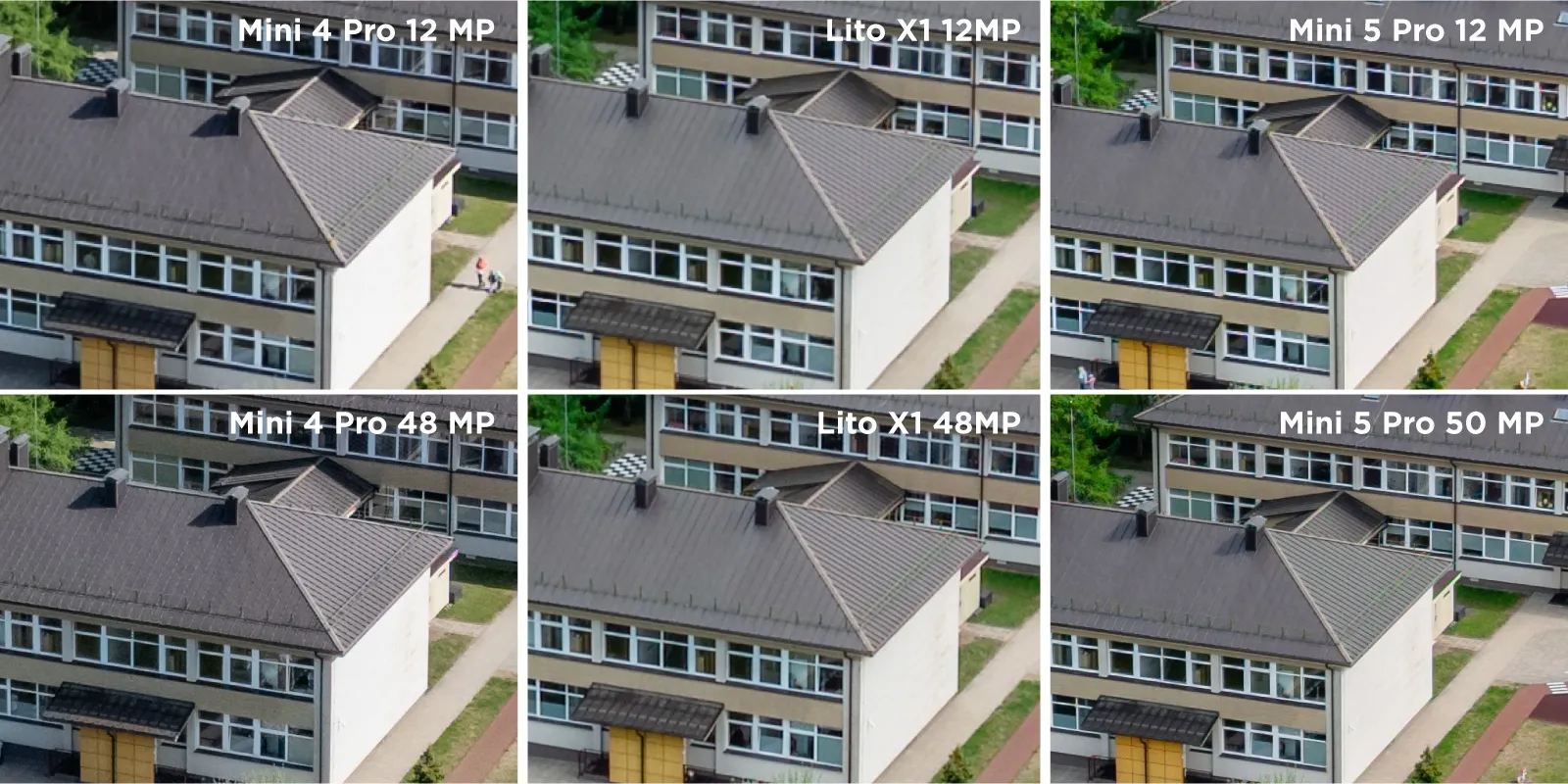
The image quality story is more nuanced than the spec sheet implies. I shot 12 megapixel and high-resolution variants on all three drones and processed them in Adobe Lightroom Classic.
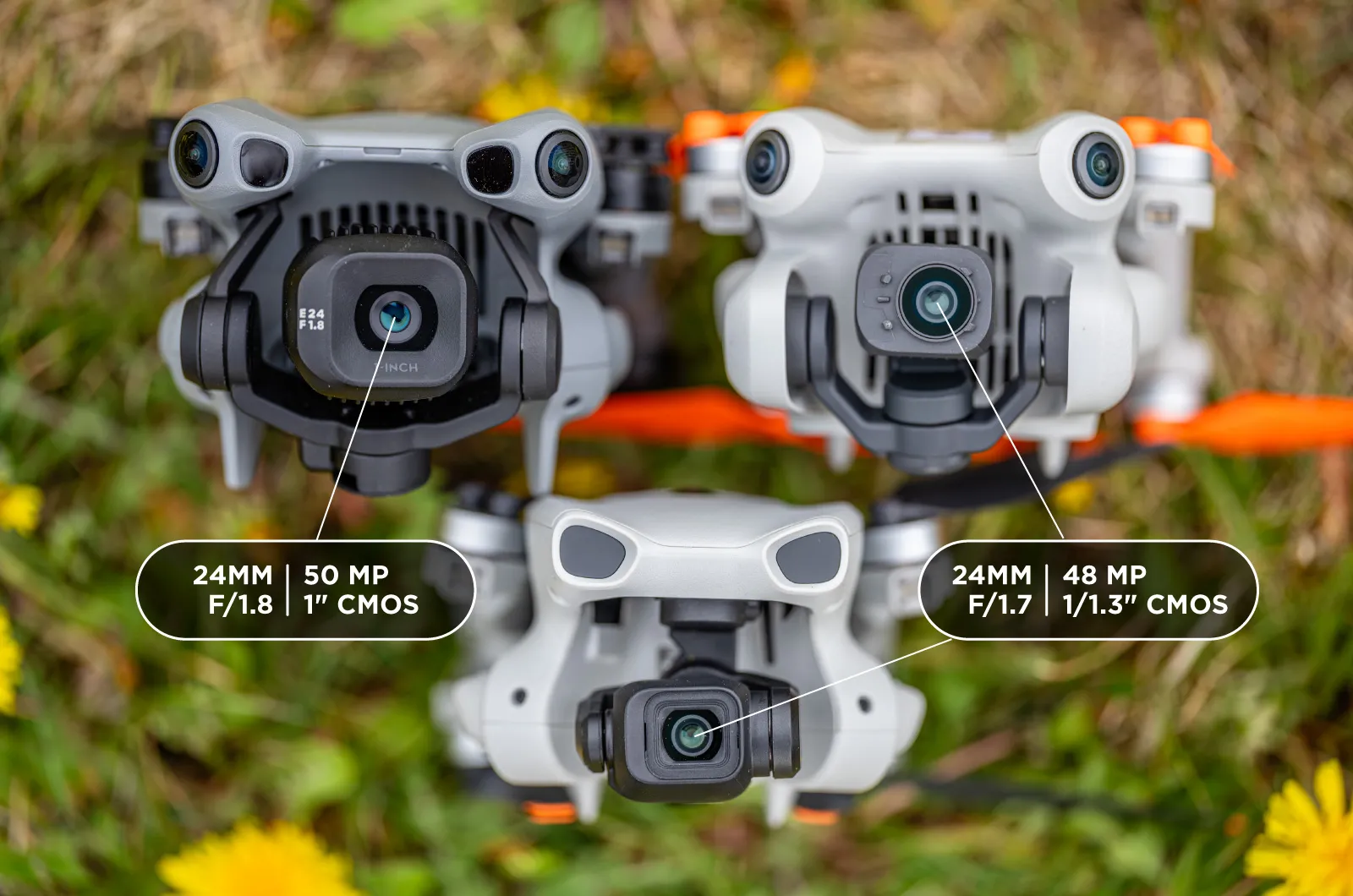 Photo Quality
The Lito X1 produces the least detail of the three, but its processing pipeline is good in both 12 megapixel and 48 megapixel modes. The Mini 4 Pro is almost identical, with one practical difference: the Mini 4 Pro benefits more from shooting in the higher-resolution mode. The Mini 5 Pro also benefits from its 50 megapixel mode and ends up at roughly the same level of detail as the Mini 4 Pro at full resolution, just with less noise.
 In the 12 megapixel modes the Mini 5 Pro still feels like the cleanest of the three and has a bit more dynamic range. But in well-lit, daytime conditions you cannot really differentiate these drones based on photo output. They are all good.
 Video Quality
In daylight the differences are also minimal. The Mini 5 Pro is the most powerful tool here in pure capability terms, but with good light all three deliver pretty good results. D-Log M is available on every drone in this comparison, the color is 10-bit, and once you set the in-camera sharpening and noise reduction to minus two, the post-processing headroom is broadly the same across all three. The Mini 5 Pro pulls ahead on slow motion (4K at 120 fps and 1080p at 240 fps) and on its 2x crop modes, which can be genuinely useful.
Low Light Performance
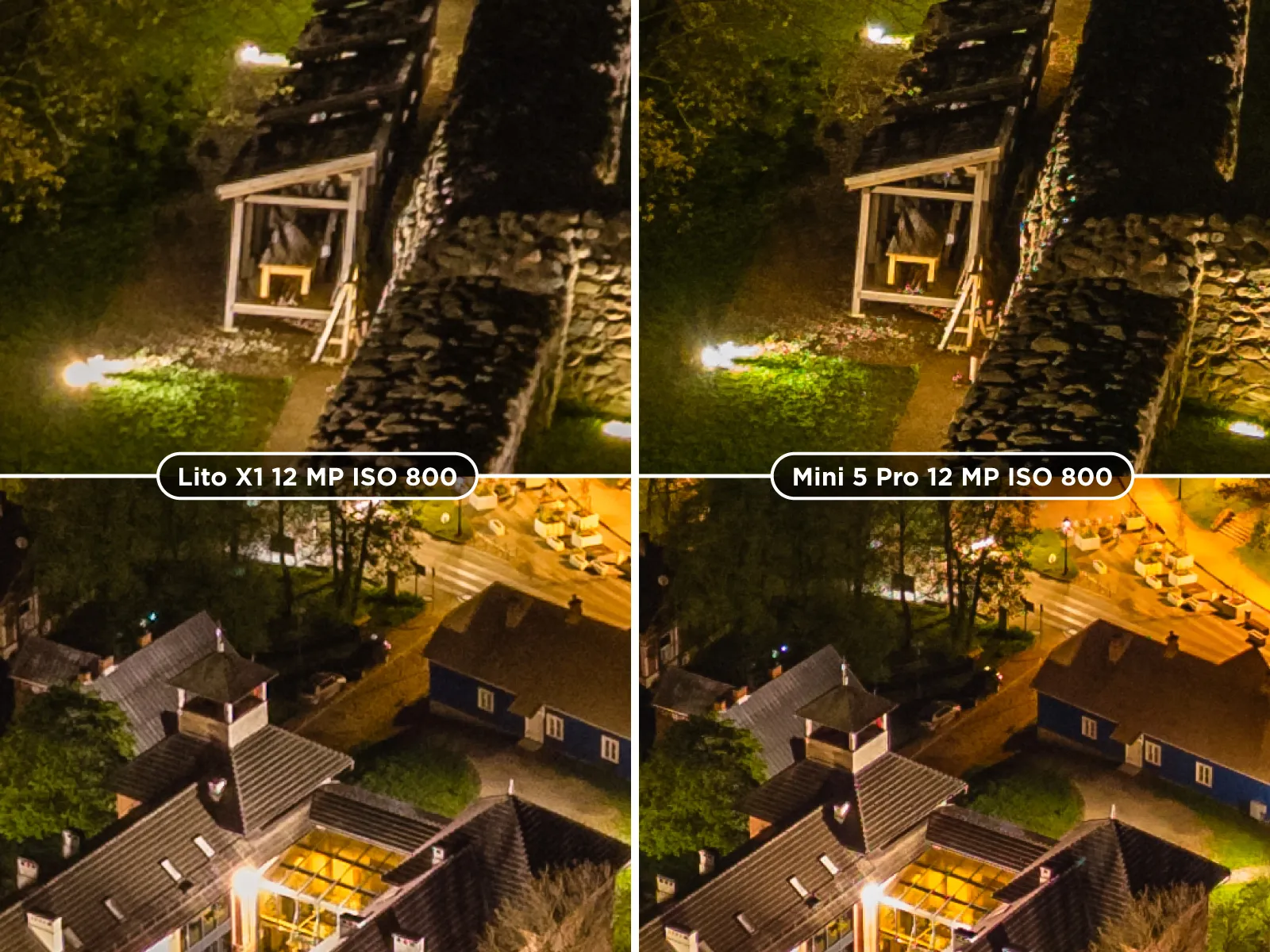
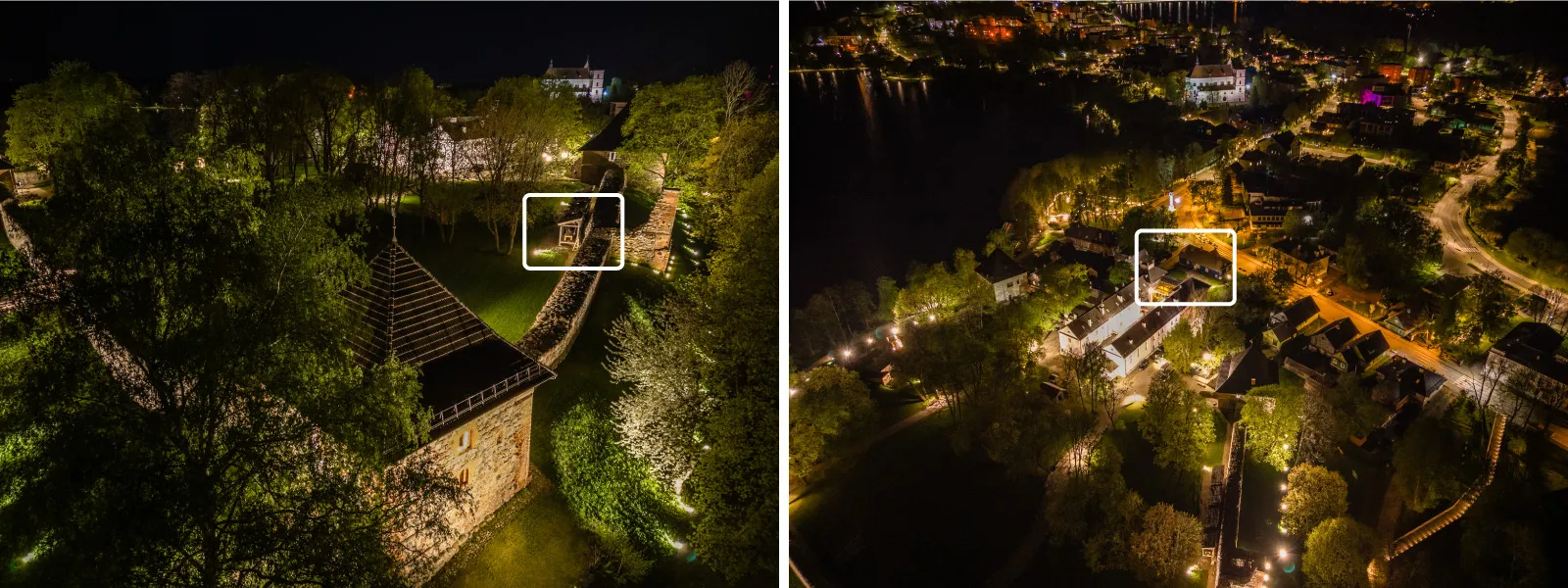 In low light the Lito X1 holds up better than I expected. For the photo comparison I shot all three drones at ISO 800, which is my personal sweet spot for nightscapes. Going higher is usually pointless on a drone, since the airframe is stable enough that you do not actually need the extra sensitivity. Going lower pushes the shutter past what is reliably stable, even in calm conditions. At ISO 800 there is almost no difference between the Lito X1 and the Mini 5 Pro. The two go neck and neck. The Mini 4 Pro sits a small step behind, the effect of an older processing pipeline.
 The video story is similar. The Lito X1 surprises again and holds up really well alongside the Mini 5 Pro. Dynamic range is maybe a touch behind, but only just, and the Lito X1 imaging pipeline deserves credit for that.
Flight Performance and Obstacle Avoidance
The Mini 5 Pro is the most powerful of the three and feels it. Climb rate and overall agility are all a bit better than on the other two. In my side-by-side testing the Mini 5 Pro's obstacle avoidance seemed a touch too permissive, and it was relatively easy to push it into spring branches and do some unintended bush trimming with the propellers.
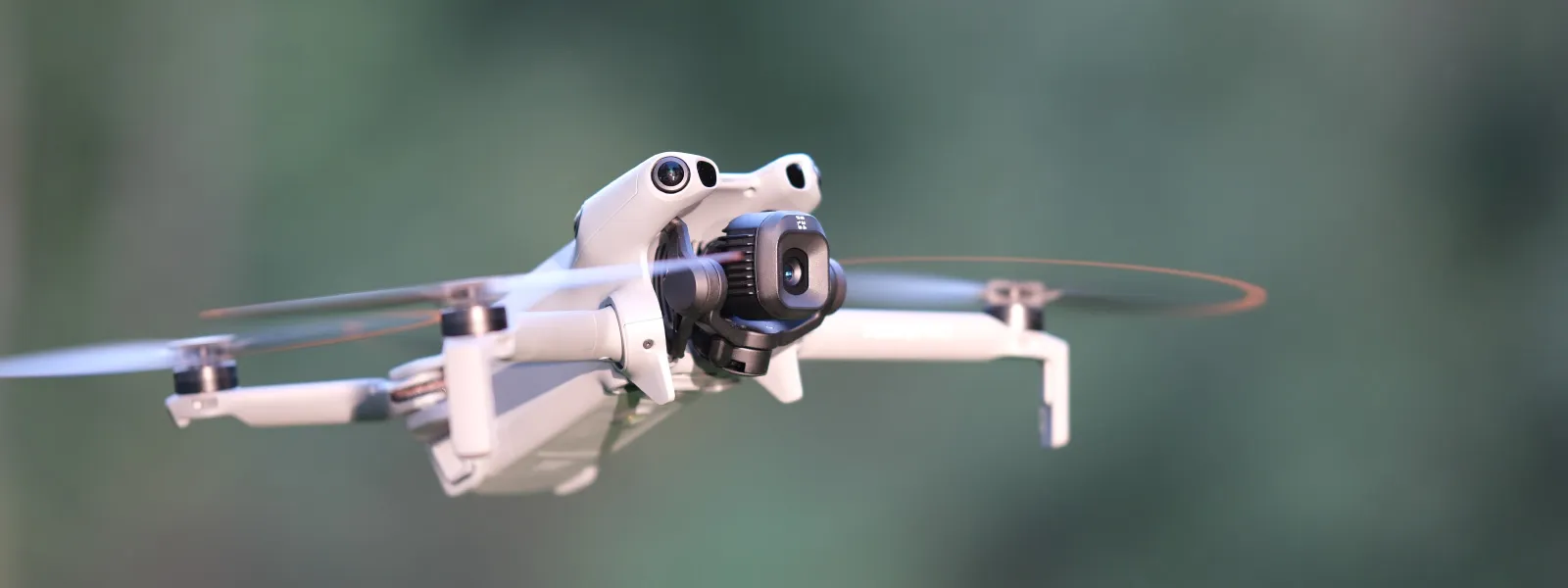 Despite the Lito X1 probably having less raw processing capability than the Mini 5 Pro, in practice I found its obstacle avoidance system to be the most reliable of the three. The combination of front LiDAR and omnidirectional vision works very well on this drone, and the tuning feels conservative in the right way.
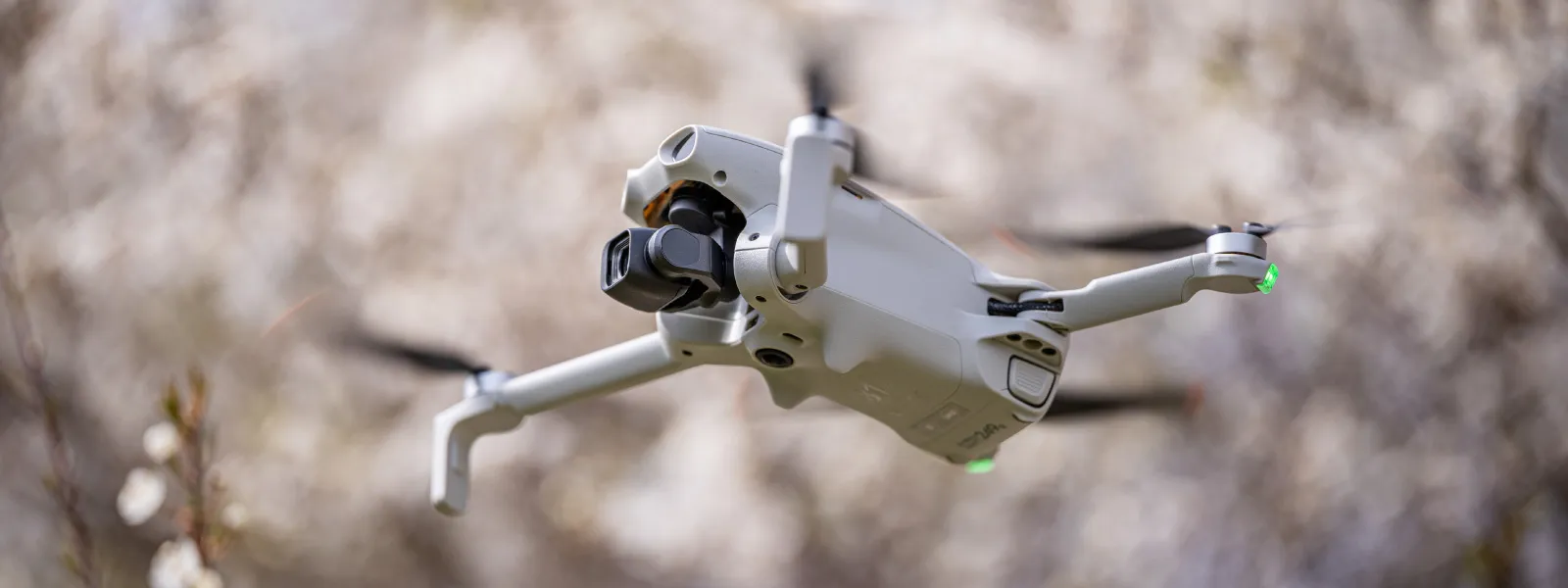 The Mini 4 Pro is still excellent in the air, but it is now the only drone in this lineup without a LiDAR sensor. In good light that does not pose an issue. In dim light the difference becomes very apparent. Having frontal avoidance unaffected at night does inspire confidence.
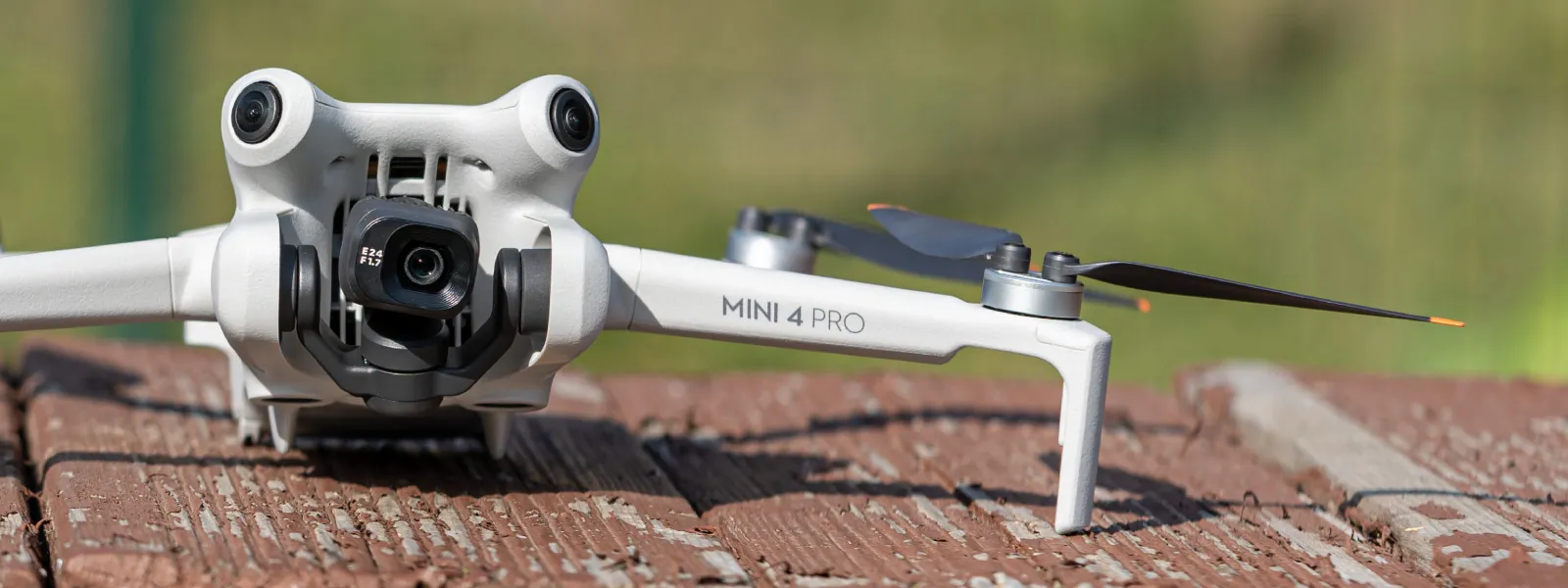 Subject tracking was very similar across all three drones in my tests, so there is no upgrade or downgrade story to tell on that front. The Lito X1 is also marginally the quietest of the three in flight, but it does not have the bottom LED light. That about sums up all of the differences.
Transmission, App, and Remotes
All three drones use the same DJI Fly app and work with the same RC2 and RC-N2 remotes. The Mini 4 Pro and Lito X1 both run on DJI O4. The Mini 5 Pro is the only one of the three with O4+. In practical, real-world flying I have never noticed a difference between O4 and O4+ that mattered. All drones performed flawlessly in reasonable flying conditions, including urban environments and decent distances.
Price-to-Performance Verdict
The Lito X1 is the cheapest when buying new. The Mini 4 Pro and the Mini 5 Pro both sit higher, with the Mini 5 Pro at the top of this trio.
Get the DJI Lito X1 if you are new to sub-250 gram drones and want the most drone for the money. You get the same camera class as the Mini 4 Pro, plus front LiDAR and 42 GB of internal storage, all in a slightly cleaner body, and at the lowest price.
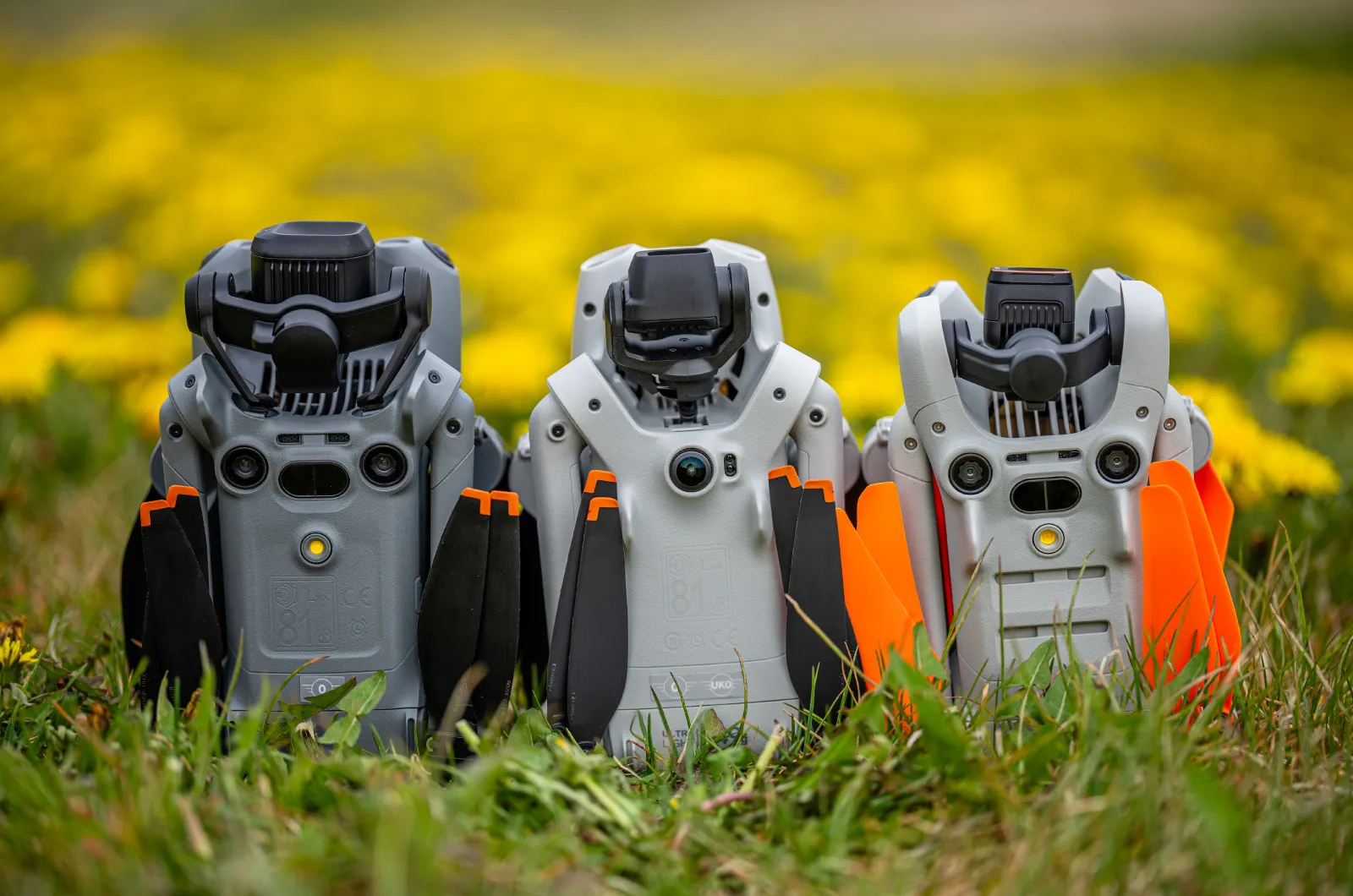 Get the DJI Mini 5 Pro if image quality is your top priority. The 1-inch sensor, the 4K at 120 fps mode, and the practical 2x crop modes are the reasons to pay flagship-Mini money. They are good reasons, but only worth it if you actually use those tools.
Keep the DJI Mini 4 Pro if you already own one. It still keeps up in all categories and there is no urgent reason to upgrade. As a 2026 purchase, however, it could be recommended only if you get it for less than the X1.
Whichever of the three you choose, the mapping workflow stays the same. Native waypoint flight means all of them can run Pixpro Waypoints grid and orbital missions, and each sits under 250 grams in the EASA Open Category, so the paperwork does not change either.
Conclusion
The DJI hardware and software stack is fully mature, and that is the most honest one-line summary of this comparison. All three of these drones are good, and the choice is about budget, image-quality demands, and how often you fly in difficult conditions. If the Lito X1 had landed two years ago it would have been the most exciting drone of the year. As it stands today, it is simply the smartest first purchase in DJI's sub-250 gram lineup.
Frequently Asked Questions
Is the DJI Lito X1 better than the Mini 4 Pro?
Yes. You get the same camera, better obstacle avoidance with front LiDAR, and 42 GB of internal storage in a slightly cleaner body, at a lower price if buying new. If you already own a Mini 4 Pro there is no reason to switch.
Should I upgrade from the Mini 4 Pro to the Mini 5 Pro?
Only if you regularly need the 1-inch sensor's low-light performance, 4K at 120 fps, or the 2x crop modes. Otherwise it is a refinement, not a necessity. Daylight photo quality between the two is close enough that most people would not pick the newer files out in a blind comparison, and the Mini 4 Pro holds a small endurance advantage in real flying.
Do all three drones support waypoint flight?
Yes. Native waypoint flight is a standard DJI feature on all three of these drones, so any of them can be used for automated mission flying. Pixpro Waypoints supports all three as well, so a planned grid or orbital route loads onto whichever model you own without changing the workflow. Waypoint capability is therefore a weak reason to choose between them.
Do all three drones use the same remote and app?
Yes. All three work with the DJI RC2 and RC-N2 controllers and the DJI Fly app. If you already own a compatible controller, moving between these models costs nothing in accessories. Batteries and propellers are not interchangeable, so those stay model-specific and are worth factoring into any price comparison.
Which one has the best obstacle avoidance?
The Lito X1, in my side-by-side testing. The Mini 5 Pro and the Lito X1 both use omnidirectional vision plus front LiDAR, but the Lito X1's tuning felt the most reliable. The Mini 4 Pro lacks LiDAR and falls off in low light.
Photographer - Drone Pilot - Photogrammetrist. Years of experience in gathering data for photogrammetry projects, client support and consultations, software testing, and working with development and marketing teams. Feel free to contact me via Pixpro Discord or email (l.zmejevskis@pix-pro.com) if you have any questions about our blog.
Related Blog Posts
Our Related Posts
All of our tools and technologies are designed, modified and updated keeping your needs in mind
Pixpro to Gaussian Splatting: How to Export Your Project to Postshot
Gaussian splatting is no longer a curiosity. People are using it for walkthroughs, marketing visuals, virtual environments, and increasingly as a pretty companion to a scan they already flew.
 Pixpro Team

The Top 10 Pixpro Blog Articles So Far
We have been publishing on this blog every week for years now, on everything from stockpile volumes and coordinate systems to scanning a cake. So it seemed like a good time to look at the numbers and see which posts people actually read, rather than which ones we enjoyed writing.
Pixpro Team
Portrait Orientation in Photogrammetry: When It Actually Helps
Is there anything to gain by scanning in portrait instead of the usual landscape? Sometimes, a little. But orientation is one of the least important decisions you make on a scan, and it is worth understanding why before you give it any more thought than that.
Pixpro Team
Ready to get started with your project?
You can choose from our three different plans or ask for a custom solution where you can process as many photos as you like!
Free 14-day trial. Cancel any time.