.svg@webp)
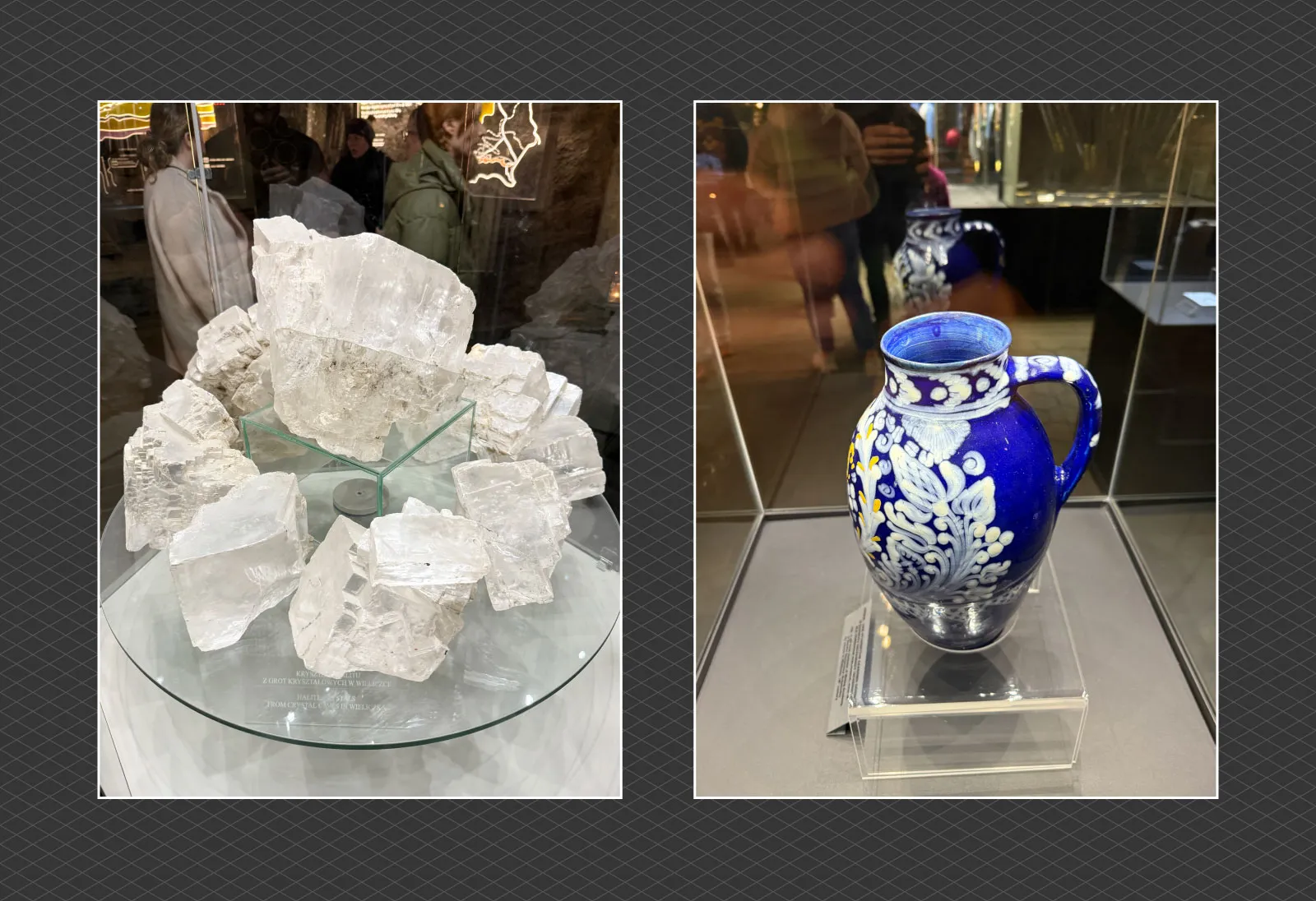
Travel Photogrammetry - More Fun than 2D Photos
 Lukas
Zmejevskis
Lukas
Zmejevskis
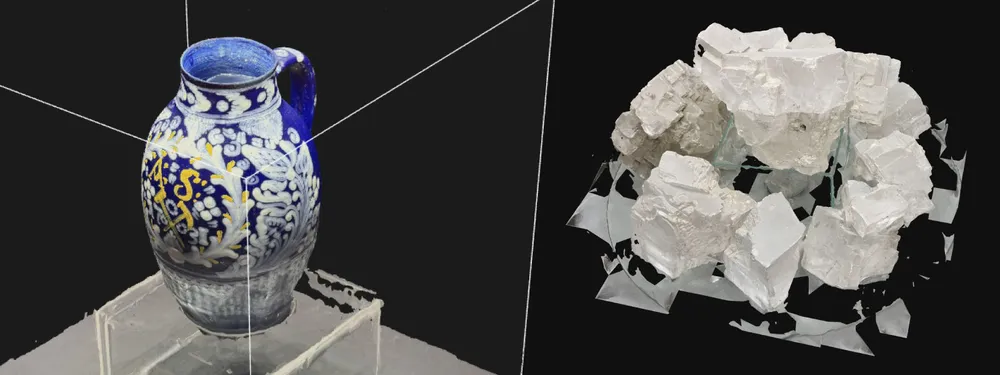
Traveling and taking photos go hand in hand. Most of us come back with similar things: sunsets, plates of food, hotel mirrors, and thirty versions of the same mountain from slightly different angles. But sometimes a 2D photo does not do justice to a moment or a place, and you wish you had something more… dimensional. Something that captures shape, texture, and the little details that flat images tend to flatten even more.
This is where a small travel-friendly idea comes in: travel photogrammetry. Or, in other words, taking a bunch of photos like a maniac, but coming home with a fun 3D model as a souvenir.
This is not a serious architectural workflow. This is not about achieving millimeter precision. This is simply a way to elevate the things you see on your trips, preserving them in a way that is more interesting than another 24 mm postcard shot loaded into Google Photos, somewhere between a boarding pass screenshot and your latest dog meme.
Why Bother Scanning Anything on Vacation?
Because sometimes a photo does not capture the entire feeling. You see a statue, a peculiar street sign, a curious little fountain, a lantern with a face on it, or a piece of ancient wall texture that looks particularly well in 3D. And you may think: damn, a simple photo does not work.
A 3D scan may work better. You can look at it later, rotate it, play with it, share it, or just laugh at how your travel bag now contains 1.2 GB of “weird rock from Croatia” data. The point is doing something fun, less mainstream, and bragging that you did not just get mere 2D photos for your trip. And because modern phones have excellent cameras, doing this is easier than ever.
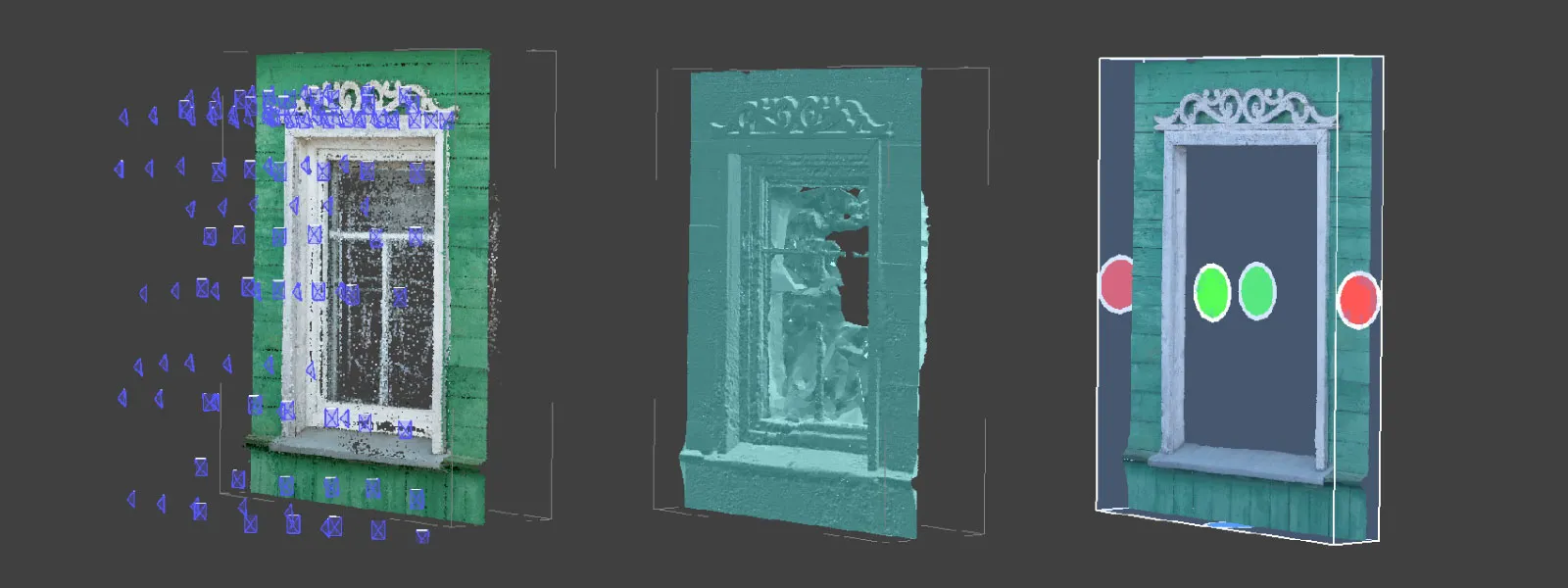 What You Need
You do not need a tripod. You do not need a professional camera or lighting. You need:
- Your phone
- Decent ambient light
- A bit of space around the object
- And the mental readiness to be that person
“That person” is the one walking in circles around a random mailbox while strangers look in confusion. Accept this role. They will forget you in three seconds; you will keep a 3D model forever.
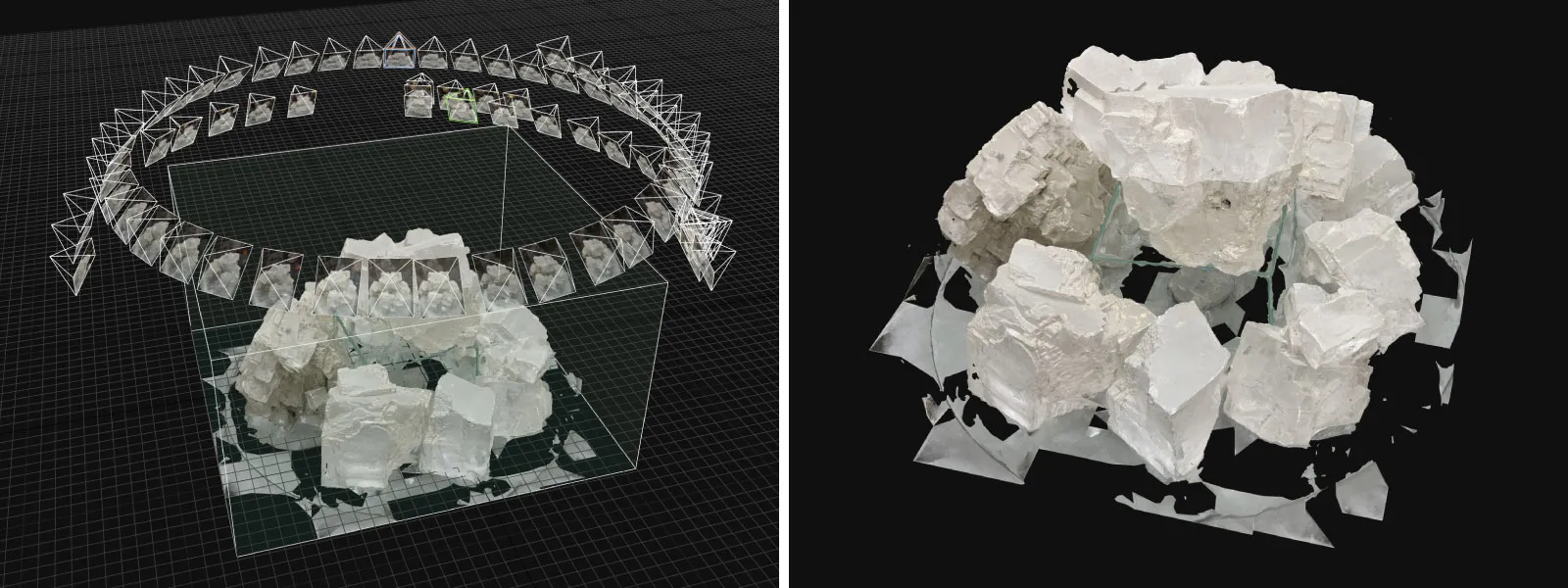 What You Can Scan While Traveling
Pretty much anything that is solid and stationary can be your target. But here are some realistic and fun travel ideas:
- Statues – tiny or huge, but at least accessible from all sides
- Interesting stones or fossils – perfect size and texture
- Street art – posters, graffiti, small reliefs
- Old architecture details – door handles, carved columns, tiles
- Souvenirs – before you give them away or pack them
- Weird objects – fountains, benches, decorative lamps, lantern dragons
- Food – yes, even food; some people scan pastries
Travel photogrammetry is basically collecting souvenirs without needing a bigger suitcase.
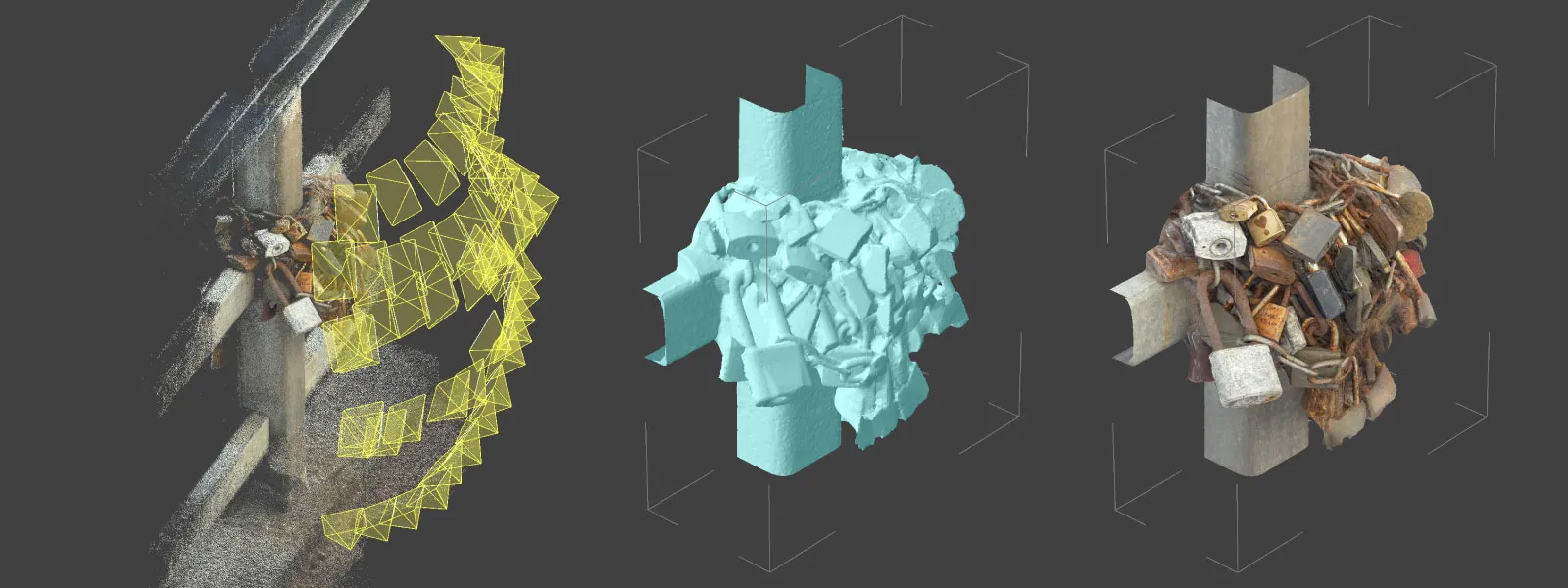 Do It Without Overthinking
Travel scanning is supposed to be quick. You do not need a workflow that sounds like a construction site documentation manual. Here is the simple version:
-
Walk around the object.
A slow, steady circle is enough around singular objects. Back and forth scanning for wall details and facades, for example. -
Keep the distance somewhat consistent.
Keep your subject the same size in the frame. -
Take a lot of photos.
Photogrammetry works by calculating differences between perspectives. So, a lot of photos from different angles. A photo each step, basically. Cover everything you want to be reconstructed in 3D. -
Avoid big shadows from your body.
Step slightly to the side if your shadow invades the scene. -
Shoot from different heights.
One circle high, one circle low, one at normal eye level. The same applies to grid scans, where the camera is moved back and forth at different levels. -
Do not worry about perfection.
You are not capturing an industrial pump station for a client. There is no pressure here, pun intended.
 Processing Your 3D Scans
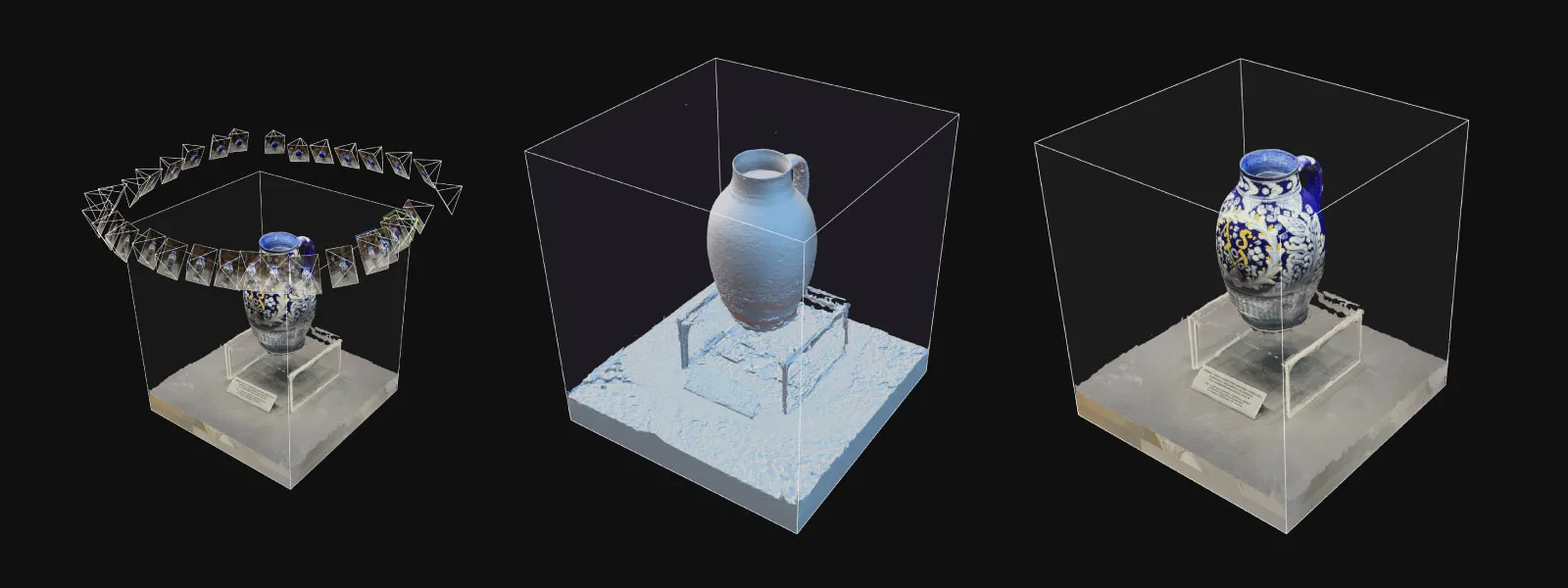
Once you are back at home, import the images into your preferred software. Any modern photogrammetry tool will handle small objects well. In our case, I am using Pixpro and Realityscan. Our Pixpro software is more of a surveyor's tool, while Realityscan is made for making 3D assets for games.
The output will vary depending on how chaotic your shooting was, but even imperfect travel photogrammetry is weirdly satisfying. You will get:
- A textured 3D model
- Sometimes, oddly melted parts.
- Sometimes, a perfect capture, completely by accident
- Always something more interesting than a regular photo
You can view the model, share it, or store it as a personal “3D postcard” from your trip.
 Public Scanning Tips
Some people feel self-conscious about scanning things in public. Here are a few strategies:
- Pretend you are taking normal photos. Which you technically are - just 70 of them from all directions.
- Seem serious, with a concerned expression on your face. That has been helpful in my experience.
- Avoid scanning objects that belong to small businesses indoors.
- Avoid scanning objects that belong to small businesses indoors.
Outdoors is usually fine, but in cramped spaces, be aware of the vibes around you. - If someone asks, you can explain that you are doing a 3D photogrammetry scan for fun.
They will either nod thoughtfully or have no idea what that means and walk away.
 Travel Photogrammetry Is For Fun
It is not meant to replace proper documentation, surveying, or even clean object scanning at home. It is simply a creative, nerd-friendly extension to regular traveling. A way to remember things more vividly, a way to collect shapes instead of magnets, and a way to make the mundane mildly entertaining. And because it is so accessible, I feel comfortable recommending anyone with a vague notion of photogrammetry or photography to try it for themselves.
Ideas For Your Next Trip
- The most interesting manhole cover you can find
- An old lock on a medieval door
- A weird tree root
- A local bakery's signature pastry
- A stone you think looks vaguely like a “thing”
- A very small fountain lion that nobody else notices
Conclusion
Travel photogrammetry may not change your life, but it might change how you view digital memories. Suddenly, every small detail becomes a potential 3D souvenir, and every quiet moment becomes a chance to capture something a bit more special than another wide shot of a cathedral exterior. You slow down, look closer, walk around things, and appreciate the textures and shapes that usually escape your attention. The best part is that you do not need anything more than your phone and a few extra minutes of shooting. So next time you are on a trip, be that person who gently circles a funny statue or a strangely shaped rock. You will come home not just with photos, but with little 3D memories - and those are worth the strange looks you get along the way.
Photographer - Drone Pilot - Photogrammetrist. Years of experience in gathering data for photogrammetry projects, client support and consultations, software testing, and working with development and marketing teams. Feel free to contact me via Pixpro Discord or email (l.zmejevskis@pix-pro.com) if you have any questions about our blog.
Related Blog Posts
Our Related Posts
All of our tools and technologies are designed, modified and updated keeping your needs in mind

What Photogrammetry Software Actually Costs in 2026
Pricing pages in this industry are a mess. Some publish a number, some hide behind "contact sales", some quote a monthly figure that only applies if you pay a year up front, and several sell the processing separately from the software that does the processing.
 Pixpro Team

Most Asked Photogrammetry Questions Part 5 - From Capture to Delivery
We are back with another installment of our photogrammetry FAQ series. These are ten more questions we hear often, from people getting started and from users already deep into their projects.
Pixpro Team
DJI Mini 5 Pro: Timed Shot During POI Tracking for Orbital Photogrammetry
Being able to run timed shot during POI tracking is a genuinely handy way to make quick orbital scans. Let me explain.
Pixpro Team
Ready to get started with your project?
You can choose from our three different plans or ask for a custom solution where you can process as many photos as you like!
Free 14-day trial. Cancel any time.